
Technology has changed how work gets done in almost every industry. Professional cleaning is a strong example. What once depended heavily on manual scheduling, paper checklists, and inconsistent follow-up now runs through digital systems, smart equipment, and workflow tools that improve speed and reliability. The shift is similar to what happened in programming, where development became more accessible through higher-level languages, open-source libraries, cloud platforms, and AI-assisted tools. This cleaning services guide examines how digital tools have improved modern cleaning operations and why that evolution resembles the way programming has become easier, faster, and more collaborative.
From Manual Labor to Structured Workflows
Professional cleaning used to be far more labor-intensive in both planning and execution. It is pretty common among cleaning teams to rely on handwritten schedules, verbal instructions, and emails. That approach worked, but it left room for delays, missed tasks, and inconsistent service quality.
Modern cleaning companies now use digital workflows to manage these challenges. Scheduling software allows supervisors to assign jobs, track completed tasks, and adjust routes in real time. Mobile apps let staff confirm arrival times, upload photos, and report issues without waiting for office follow-up.
Programming experienced a similar change. Early software development often required low-level code, complex setup, and extensive manual troubleshooting. Today, developers build faster by using frameworks, integrated development environments, and version control platforms that organize work and reduce repetitive effort. In both industries, structured workflows replace fragmented processes and improve consistency.
Smart Tools Improve Cleaning Accuracy and Efficiency
One of the biggest changes in professional cleaning is the use of smarter tools. Digital inspection systems, sensor-based equipment, and automated cleaning machines allow teams to work more precisely than before. For example, some companies use tools that monitor surface conditions, track cleaning progress, or document completed tasks with time-stamped records.
Programming has followed the same pattern. Developers now use code editors with built-in suggestions, automated testing tools, and cloud-based debugging platforms. These tools do not replace skill, but they reduce the time spent on repetitive tasks and help professionals focus on more complex problems.
The result in both fields is better performance with less wasted effort. Cleaning staff can complete jobs more thoroughly. Developers can build and deploy software more efficiently.
Why Accessibility has Improved in both Fields?
Modern technology has made professional cleaning easier to manage for companies of different sizes. Small to medium businesses in the cleaning industry have been given the opportunity to level the playing field as they no longer have to hire big admin team to handle invoicing, follow-ups, and dispatching. Cloud-based platforms automate many of those functions.
The same is true in programming. A single developer can now access tools that once required a large technical team. Open-source frameworks, learning resources, and cloud services allow more people to start building software with fewer upfront barriers.
This increased accessibility matters because it broadens participation. More people can enter both industries, learn the necessary skills, and deliver professional-level results. It also encourages innovation, since companies and developers can test ideas faster and adapt more quickly to customer needs.
For cleaning businesses, accessibility means faster client onboarding, easier communication, and simpler service management. For programmers, it means quicker development cycles and lower technical overhead.
Data, Automation, and Better Decision-Making
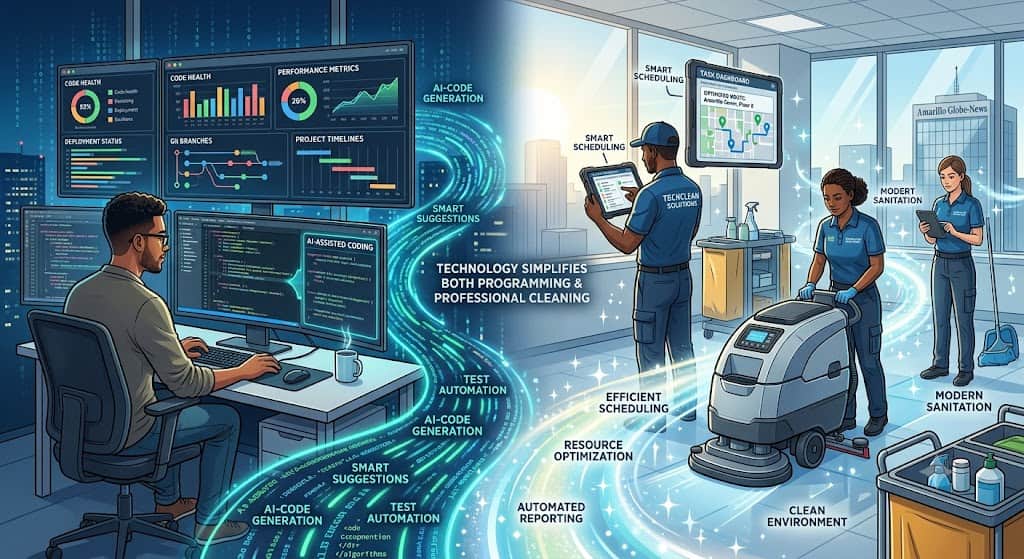
Data is now central to how modern service businesses operate. Cleaning companies can use analytics to identify busy service times, track employee performance, and monitor customer satisfaction. GPS-enabled workforce systems help optimize travel routes and reduce delays. Digital records make it easier to measure productivity and identify where improvements are needed.
Automation also plays an important role. Repetitive tasks like appointment reminders, billing updates, and service confirmations can be handled automatically, freeing staff to focus on higher-value work.
Programming has benefited from the same logic. Automation tools now handle code formatting, testing, deployment, and dependency management. Developers spend less time on repetitive maintenance and more time solving core problems.
In both fields, data and automation do not remove the need for expertise. They make good decisions faster and help professionals work with greater precision.
What Technology means for the Future of Clean?
The biggest lesson from this cleaning services guide is that technology does not simply make work easier, it makes quality more repeatable. Professional cleaning is now more organized, measurable, and scalable because digital tools reduce manual inefficiencies and improve oversight. Programming followed a similar path: what was once difficult and technical became more approachable through better tools, clearer workflows, and collaborative platforms.
For cleaning companies, this means faster scheduling, better accountability, and more consistent results. For programmers, it means easier development, faster deployment, and broader access to software creation. In both industries, technology has removed much of the friction that once slowed progress.
The result is a more accessible professional standard. Whether the task is maintaining a building or writing code, modern tools help skilled people deliver better work with less wasted time. That is why technology has become essential not only to productivity, but also to the quality and reach of professional services today.