
Creating tools and applications is actually not enough in today’s digital world especially to tech enthusiasts. But, they have to know how digital content can play out real-time in industries. The live coverage of sports events in real-time on the internet is one such area where this intersection is turning out to be especially interesting. This is actually sports broadcasting (스포츠중계) that is usually with data and other interactive options.
To programmers and developers, the study of how state-of-the-art sports broadcasting works can offer lessons. It includes ways to create systems that can manage high concurrency, provide consistent performance, and be able to combine with data feeds without glitches. These technologies stretch the limits of what the current software solutions can accomplish in the process of satisfying millions of end-users around the globe.
Real-Time Sports Broadcasting in the Field of Technology
Fundamentally, sports broadcasting concerns providing live sporting content and supplementary information. It includes scores, play-by-play, and statistics, with the least amount of latency and the highest dependability. This demands integrated pipelines that take control of video streams, information APIs, user interfaces, and real-time analytics. To a developer this includes:
Efficient Networking
WebSockets and HTTP/2 are used to maintain efficiency in streaming data and video in a fast and reliable manner.
Scalable Architecture
Server-side applications need to be able to support traffic surges in real-time events. It also allows them to occur without crashing and slowing down.
Data Integration
To enable aspects such as in-play alerts or dynamic dashboards, real-time statistics and scores have to be combined with live video.
Cross-Platform Support
The user can watch streams or live content on desktop, mobile, and even Smart TVs. Each device requires a close eye on performance.
This is precisely the sort of issues that most software teams have to deal with when creating scalable, high-performance systems in their own projects.
Why Developers should Pay Attention to Sports Streaming Trends
In addition to entertainment, sports broadcasting can be considered as a great learning resource to programmers. The way sports streaming services can support millions of connections on a high level of major events score can be seen to influence a more positive change:
- Load Balancing and Fault Tolerance
- On-the-fly Data Processing and Event Processing
- Reactive User Interfaces over Gadgets
- Streaming protocols and the use of CDNs are used efficiently
These environments can teach the principles that are applicable in most other areas. It includes financial applications, IoT data dashboards, and multiplayer gaming backends.
You may also read: Becoming a Game Programmer
The Gap between Programming and Practical Applications
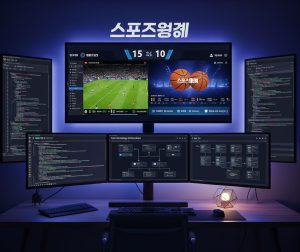
We frequently discuss how software and programming concepts are applied to the real world. Through researching on the sports broadcasting technologies of today, developers are able to enhance their capacity to create systems that have to work at scale. It might also offer low-latency user experiences. Learning to program asynchronously and reactivate systems can have a significant positive impact. It helps developers create responsive and resilient applications.
The Skills You Can Learn through Live Streaming Systems
The following are just some of the practical developer skills that can be acquired by studying sports streaming technologies:
Real-Time Data Processing
Know how to stream and process feeds of data in a non-lagging fashion.
Scalable System Design
Test the performance of the backend systems in spiky traffic and distributed load.
Front-end Optimization
Learn the performance benefits of client-side rendering that can remain performant even at high data rates.
API Integration
It should be studied how various external and internal APIs. The coverage includes data feeds of scores and the player statistics, which are coordinated to perform in real-time.
Such skills will prove useful way beyond sports, in financial dashboard and live group work-tools and surveillance.
The Future of Live Digital Interaction
The need to know how to create, deploy and optimize such systems is increasing as more industries implement real-time features into their technology. It is regardless whether it is in the live sports or financial data or interactive collaboration. Environmental learning as in sports broadcasting will assist the developer in creating systems that will delight the users with reliability, speed, and smooth sailing.
Accepting the challenges and lessons that come with real-time streaming, programmers can gain knowledge. It is not only in the technical realm of the field but also understands how contemporary software ecosystems deliver dynamic content to audiences worldwide.